



Wersja tekstowa
Leczenie uwzględniające gospodarkę hormonalną u kobiet z psychozą
Ochronny wpływ estrogenów na psychozę był od dawna opisywany w badaniach naukowych i epidemiologicznych. Zjawisko to można kojarzyć z drugim szczytem zachorowań na schizofrenię charakterystycznym dla kobiet, przypadającym na późniejszy okres życia — około perimenopauzy — gdy stężenie estrogenów spada.
Jak ta wiedza powinna przekładać się na codzienne decyzje kliniczne? W jaki sposób estrogeny oddziałują ze standardowym leczeniem psychozy? I kiedy same mogą stać się metodą leczenia? Niedawny artykuł przeglądowy opublikowany w Lancet Psychiatry rzuca nowe światło na rolę hormonów jajnikowych w psychozie i przedstawia rekomendacje dotyczące włączania tych informacji do praktyki klinicznej oraz prowadzenia terapii uwzględniającej status hormonalny.
Pobierz PDF i inne pliki
Zaostrzenia psychozy w fazie perimenstrualnej różnią się od PMDD
Autorzy przeprowadzili narracyjny przegląd piśmiennictwa, którego celem było opisanie związku między cyklem miesiączkowym a objawami psychotycznymi, sposobów wzajemnego oddziaływania hormonów jajnikowych i leczenia przeciwpsychotycznego oraz roli terapii estrogenowych w leczeniu psychozy. Kilka ich spostrzeżeń szczególnie przykuło moją uwagę.
Autorzy zwracają uwagę, że objawy psychotyczne mają tendencję do nasilania się, a ryzyko hospitalizacji wzrasta w fazie perimenstrualnej. Faza perimenstrualna obejmuje cztero- do sześciodniowy okres późnej fazy lutealnej i wczesnej fazy folikularnej, gdy stężenia zarówno estrogenów, jak i progesteronu są najniższe. W uproszczeniu można wyjaśnić pacjentkom, że chodzi o kilka dni przed menstruacją i po jej rozpoczęciu.
Warto podkreślić, że ten wzorzec zaostrzeń różni się od klasycznie opisywanego i nauczanego wzorca w przedmiesiączkowym zaburzeniu dysforycznym (PMDD). W PMDD objawy nastroju nasilają się w fazie lutealnej, a pojawienie się fazy folikularnej wraz z menstruacją przynosi ulgę — często niemal natychmiastową.
Prospektywne monitorowanie objawów na przestrzeni kilku cykli
U pacjentek z podejrzeniem wahań objawów związanych z cyklem miesiączkowym autorzy zalecają prospektywne monitorowanie objawów przez dwa do trzech cykli miesiączkowych przy użyciu narzędzi takich jak Dziennik Nasilenia Dolegliwości (Daily Record of Severity of Problems, DRSP). DRSP nie zawiera jednak kategorii obejmującej objawy psychotyczne jako takie, dlatego należałoby ją uzupełnić wspólnie z pacjentką.
Zgadzam się z tą rekomendacją i podkreślam, że interpretując zebrane dane, utrzymywanie się zaostrzeń psychozy we wczesnych dniach cyklu miesiączkowego będzie potwierdzać, a nie podważać postawioną hipotezę.
Pobierz PDF i inne pliki
Stężenia hormonów rzadko ukierunkowują leczenie
Często jestem pytana o zasadność oznaczania stężeń hormonów u tych pacjentek w ramach oceny klinicznej. W oparciu o niniejszy przegląd oraz zgodnie z własnym doświadczeniem klinicznym odpowiedź brzmi: zasadniczo nie. W psychozie — podobnie jak w innych zaostrzeniach nastroju związanych z cyklem miesiączkowym — nasilenie objawów wydaje się bardziej związane z indywidualną wrażliwością na wahania hormonalne niż z bezwzględnymi nieprawidłowymi stężeniami.
Chociaż w niektórych badaniach wykazano niższe stężenia estrogenów u kobiet przed menopauzą z psychozą w porównaniu ze zdrowymi grupami kontrolnymi, wynik ten nie jest wyraźnie niezależny od częstszego stosowania leków przeciwpsychotycznych podwyższających stężenie prolaktyny — i nie miałby wpływu na moje decyzje kliniczne.
Leki przeciwpsychotyczne oszczędzające prolaktynę jako preferowane leczenie pierwszego wyboru
Chociaż nie zalecam oznaczania stężeń hormonów we krwi w celu opracowania planu leczenia, uważam, że pacjentki mogą odnieść korzyść ze strategii terapeutycznej minimalizującej supresję i wahania estrogenów.
Leki przeciwpsychotyczne oszczędzające prolaktynę, takie jak arypiprazol, są preferowane jako leczenie pierwszego wyboru u kobiet z psychozą nieafektywną w międzynarodowych wytycznych opartych na konsensusie ekspertów, ze względu na korzystny ogólny profil działań niepożądanych. Jak podkreśla niniejszy przegląd, mają one również dodatkową zaletę — mniejsze ryzyko wywoływania objawów hipoestrogenizmu i nieregularności miesiączkowania.
Istotna jest ocena i leczenie hiperprolaktynemii. Autorzy zalecają zamianę na lek oszczędzający prolaktynę lub augmentację adjuwantowym arypiprolem w małej dawce w przypadku wystąpienia hiperprolaktynemii, zamiast jedynie zmniejszania dawki aktualnie stosowanego leku.
Pobierz PDF i inne pliki
Estrogeny hamują metabolizm szlaku CYP1A2
Kolejny ważny wniosek z przeglądu dotyczy wpływu stężeń estrogenów na metabolizm kilku leków przeciwpsychotycznych. Estrogeny, w tym etynyloestradiol zawarty w złożonych doustnych środkach antykoncepcyjnych, silnie hamują CYP1A2, co może prowadzić do wyższych stężeń klozapiny, olanzapiny i potencjalnie asenapiny w osoczu.
Jeżeli pacjentka przyjmuje klozapinę, olanzapinę lub asenapinę, wywiad lekarski powinien obejmować pytania dotyczące etapu życia reprodukcyjnego, regularności cyklu miesiączkowego i stosowanej metody antykoncepcji. Informacje te należy weryfikować przy każdej kolejnej wizycie. W praktycznym ujęciu, interakcja z estrogenami oznacza, że u tej samej pacjentki ta sama dobowa dawka tych leków przeciwpsychotycznych może skutkować obniżonym stężeniem w osoczu w okresach, gdy stężenie estrogenów spada. Na przykład:
- W fazie perimenstrualnej cyklu miesiączkowego
- W okresie menopauzy
- Po odstawieniu złożonej doustnej antykoncepcji lub hormonalnej terapii zastępczej
Klinicznie, jeśli dotychczas dobrze kontrolowane objawy nawracają w tych okolicznościach, należy rozważyć możliwość skutecznego zmniejszenia dawki i konieczność jej zwiększenia w celu utrzymania tego samego stężenia w osoczu. Z drugiej strony, zaleca się rozpoczynanie leczenia klozapiną od połowy typowej dawki początkowej u kobiet stosujących złożoną doustną antykoncepcję, aby zminimalizować ryzyko działań niepożądanych.
Autorzy zaznaczają jednak, że dostępnych jest mniej formalnych danych przemawiających za koniecznością dostosowania dawki leków przeciwpsychotycznych w przerwie hormonalnej doustnego środka antykoncepcyjnego. Zgadzam się, że zmniejszanie dawki leku przeciwpsychotycznego w tych dniach nie wydaje się klinicznie konieczne u większości pacjentek, a bardziej złożone schematy dawkowania mogą negatywnie wpływać na przestrzeganie zaleceń.
Kiedy hormony stają się leczeniem
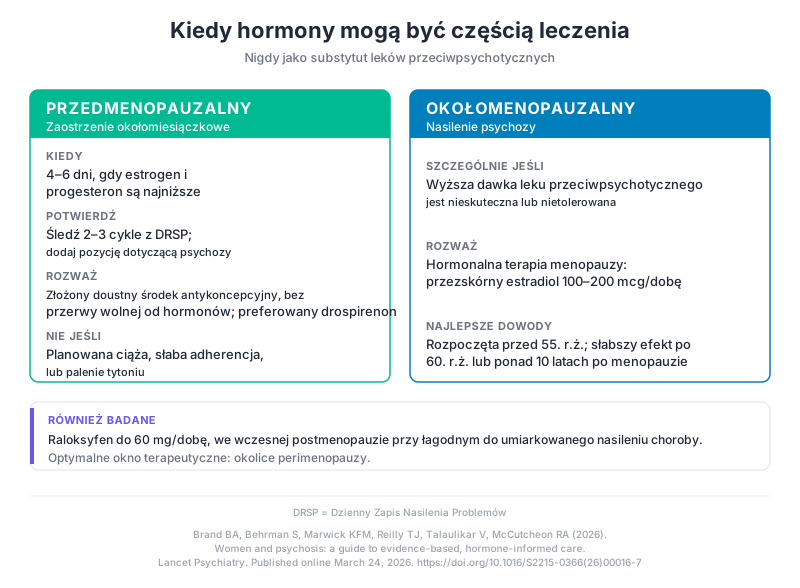
Chociaż wszystkie powyższe punkty dotyczą oddziaływania hormonów na leczenie, często pojawia się pytanie o to, kiedy i czy hormony powinny być samym leczeniem. Autorzy podkreślają, że terapie estrogenowe nie są standardowym elementem opieki nad kobietami z psychozą. Oczywiście nie powinny zastępować roli leków przeciwpsychotycznych, jednak istnieje kilka sytuacji klinicznych, w których włączenie leczenia hormonalnego do planu terapeutycznego mogłoby być brane pod uwagę.
Pobierz PDF i inne pliki
Złożona doustna antykoncepcja u kobiet przed menopauzą
U kobiet przed menopauzą doświadczających perimenstrualnych zaostrzeń objawów złożona doustna antykoncepcja stosowana bez przerwy hormonalnej może być pomocna u pacjentek wrażliwych na wahania hormonalne. W takich przypadkach preferuję preparaty zawierające drospirenon.
Nie wszystkie pacjentki będą odpowiednimi kandydatkami do tego podejścia. Przykładem są sytuacje, gdy pacjentka planuje zajść w ciążę w najbliższej przyszłości lub — odwrotnie — chce uniknąć ciąży, lecz ma trudności z regularnym przyjmowaniem codziennych leków. Większość wkładek domacicznych (IUD) i innych długodziałających metod antykoncepcyjnych jest oparta na progestinie i nie można oczekiwać, że przyniosą podobny potencjalny efekt korzystny.
Jeśli cele antykoncepcyjne pacjentki nie są zgodne ze stosowaniem złożonej doustnej antykoncepcji, priorytetem jest antykoncepcja jako taka. Kolejnym często spotykanym przeciwwskazaniem, o którym należy pamiętać, jest palenie papierosów, które zwiększa ryzyko sercowo-naczyniowe związane z doustnymi środkami antykoncepcyjnymi.
Menopauzalna terapia hormonalna w perimenopauzie
U kobiet w perimenopauzie doświadczających nasilenia objawów psychotycznych można rozważyć menopauzalną terapię hormonalną. Dotyczy to zwłaszcza sytuacji, gdy zwiększenie dawki leku przeciwpsychotycznego jest nietolerowane lub nieskuteczne, albo gdy pacjentka doświadcza innych objawów, dla których menopauzalna terapia hormonalna mogłaby przynieść korzyść, takich jak uderzenia gorąca.
Przegląd podkreśla, że najsilniejsze dane dotyczące skuteczności w psychozie pochodzą z badań, w których terapię inicjowano przed 55. rokiem życia i stosowano przezskórne plastry z estradiolem w dawce 100 do 200 mcg na dobę. Dane są mniej przekonujące u kobiet po 60. roku życia lub ponad 10 lat po ostatniej miesiączce.
Raloksyfen, agonista estrogenowy w mózgu i kościach, pierwotnie zatwierdzony do leczenia osteoporozy, dysponuje również pewnymi danymi sugerującymi, że dawki do 60 mg na dobę mogą być pomocne u kobiet we wczesnej fazie pomenopauzalnej z łagodną do umiarkowanej nasilenia chorobą. Łącznie wyniki te wskazują na optymalne okno terapeutyczne w okresie perimenopauzy, co jest spójne z innymi korzyściami obserwowanymi w przypadku menopauzalnej terapii hormonalnej.
Pobierz PDF i inne pliki
Uwzględnianie aspektów hormonalnych bez przepisywania hormonów
Na zakończenie warto podkreślić, że uwzględnianie aspektów hormonalnych w konceptualizacji przypadku i planowaniu leczenia nie wymaga samodzielnego przepisywania terapii hormonalnych. Gdy lekarz i pacjentka dojdą do wniosku, że może ona skorzystać na terapii estrogenowej, dobrym punktem wyjścia jest współpraca z ginekologiem lub lekarzem pierwszego kontaktu pacjentki.
Abstract
Streszczenie oryginalnego artykułu, przytoczone w języku angielskim.
Women and psychosis: a guide to evidence-based, hormone-informed care
Bodyl A Brand, PhD, Sophie Behrman, MRCPsych, Katie F M Marwick, MRCPsych PhDc ∙ Thomas J Reilly, MRCPsych, Prof Iris E C Sommer, MD PhD, Vikram Talaulikar, MD PhDd, et al.
Psychosis is associated with sex differences that are rarely considered in routine care. Oestrogen exerts protective effects, with symptom exacerbation and increased relapse risk occurring during low-oestrogen states, such as perimenstruation, postpartum, and menopause transition. Antipsychotic pharmacokinetics and response vary by sex and hormonal status, with premenopausal women requiring lower doses, and postmenopausal women showing reduced treatment efficacy. Antipsychotic-induced hyperprolactinaemia can suppress endogenous oestrogen, compounding both mental and physical health risks. Despite this, treatment guidelines remain largely sex neutral. This Review outlines the role of ovarian hormones in psychosis and offers practical considerations to support the first steps towards implementing hormone-informed care, providing a conceptual framework to guide clinical decision making with the aim of improving outcomes for women with psychosis across the lifespan. Key recommendations include thorough assessment of hormonal status, sex-specific prescribing, and the judicious use of oestrogen-based interventions such as hormonal contraception, hormone therapy, and oestrogen receptor modulators.
Pobierz PDF i inne pliki
Piśmiennictwo
Brand, B.; Behrman, S.; Marwick, K.; Reilly, T.; Sommer, I.; Talaulikar, V. et al. (2026). Women and psychosis: a guide to evidence-based, hormone-informed care. The Lancet Psychiatry; 13(6):508-521.
